 RYBA LAB
Abyss. Life in the Dark · 2026
Motherhood and Other Invasions
Comic
The project tells the fictional story of two rapa whelks that are the first to reach the coast of Crimea and found the Black Sea population. Their journey begins in the Sea of Japan — it was from there, after the Second World War, that the rapa whelk reached the Black Sea in ships’ ballast water.
The story of the two molluscs is interwoven with the history of humankind and of the sea. Through it, the comic explores the connections between motherhood and predation, survival and invasion, victim and killer, the life and death of individual creatures and of entire species.
Invasion here is the consequence of movements that bind human history to the history of the marine ecosystem.
Lab interview
Answers from the online lab of Abyss. Life in the Dark, 2026.
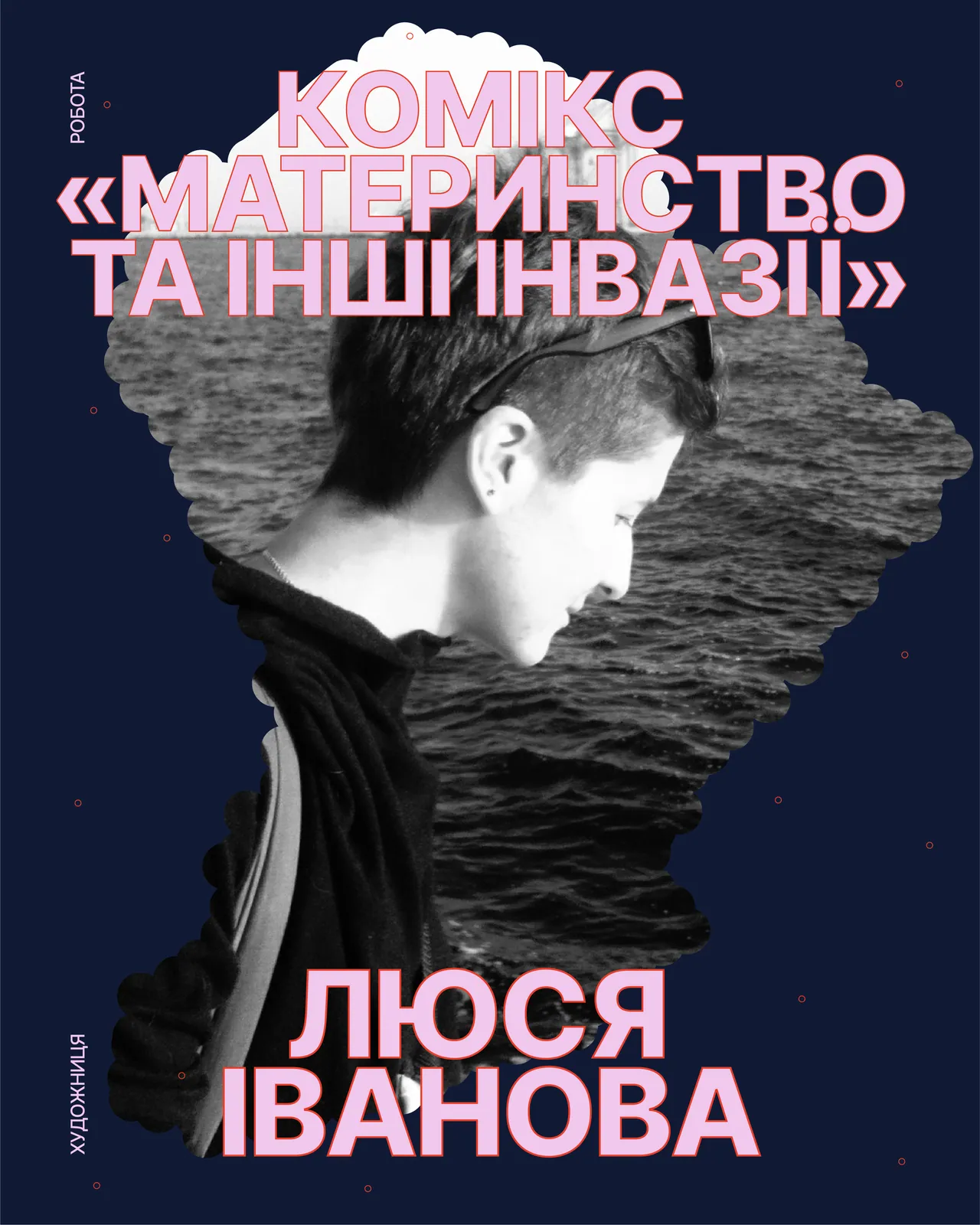
Tell us briefly about yourself: what do you do, and what theme are you working with at the lab?
I work with painting, drawing and other media. In this programme I worked mostly on a comic about how the rapa whelk found its way into the Black Sea.
What was the beginning? Which image, phenomenon or scientific fact became the starting point of your work?
At first I didn’t intend to work with a specific narrative; I only wanted to use images indirectly, because I was working on a series of paintings on paper. But I felt that the sheer amount of information and the scientific nature of the project were constraining me and pushing me towards the concrete. So in the end I found my balance in the form of a comic, once I began developing the image of the rapa whelk.
Which scientific theme or research did you work with, and what struck you most about it?
I worked with the story of one of the Black Sea’s creatures — the rapa whelk, which is called invasive. I see many connections between humans and the rapa whelk, between motherhood and predation, survival and invasion, victim and killer, and, in the end, life and death. I like that with living beings other than humans it is easier not to apply ethics; it is impossible to take offence at what they do.
We can’t take offence at the rapa whelk because the natural conditions of the Black Sea suited it so well that its gigantic population devoured all the oysters, people had to close three plants, and the mussels that remain can no longer keep the water clean. We can’t blame it — not only because we ourselves caused this invasion and the changes that followed, but also because it is simply pointless, like taking offence at an earthquake.
Which features of deep-sea life turned out to resonate most with human experience for you?
Probably migration, the conquest of territory, and the global dependence of individuals on their surroundings and circumstances.
Has your attitude to the sea changed after working on this project?
Yes! The sea has opened up to me a little more. I learnt more about its incredible history and its inhabitants, and it has become something more transient for me, more changeable, more complex.
What question would you like to leave the viewer with after they encounter your work?
Perhaps, once the rapa whelk is brought into the human plane, it will become easier for the viewer to see humans, too, as part of the same processes, without separating them from the principles of nature.